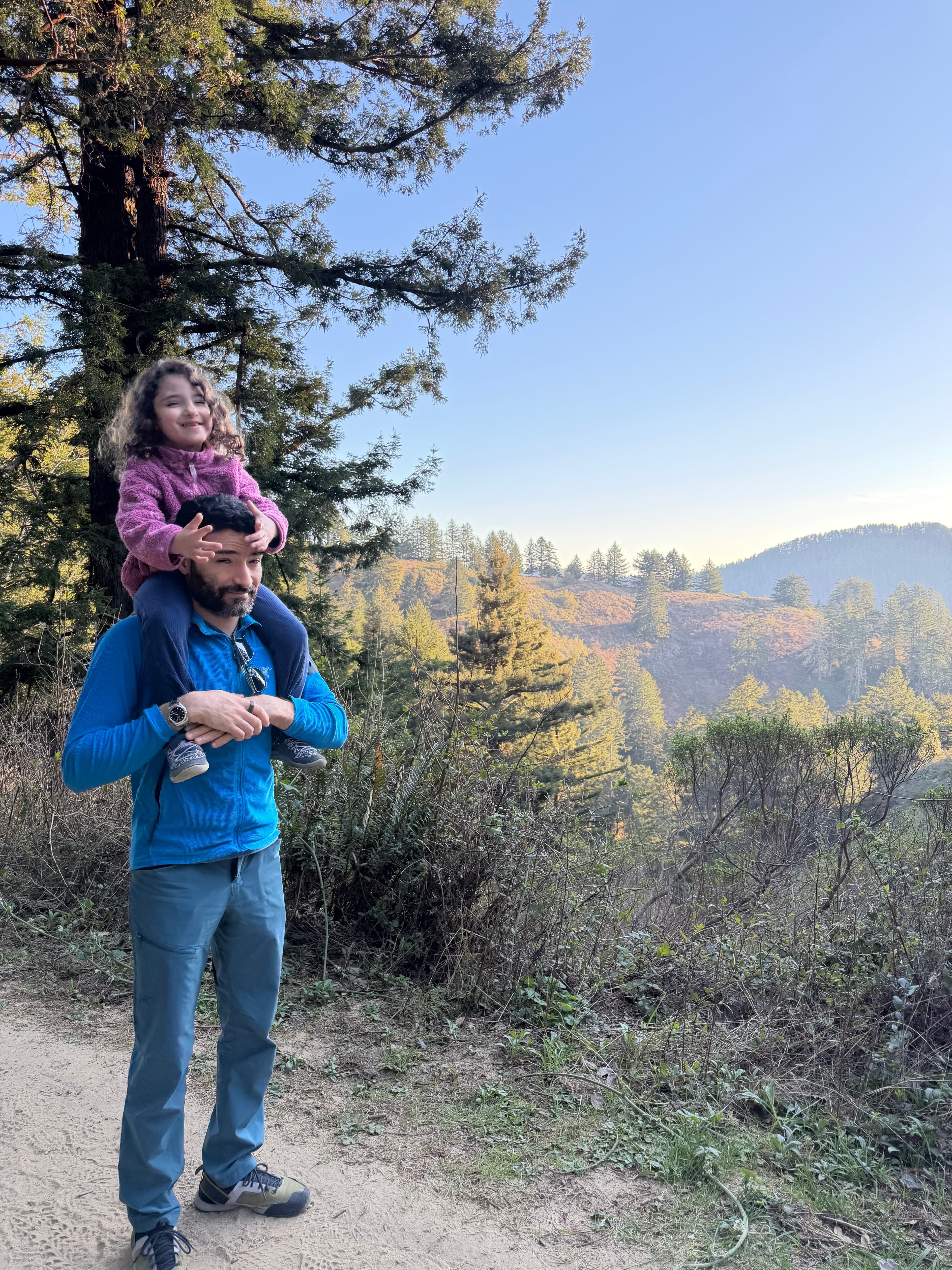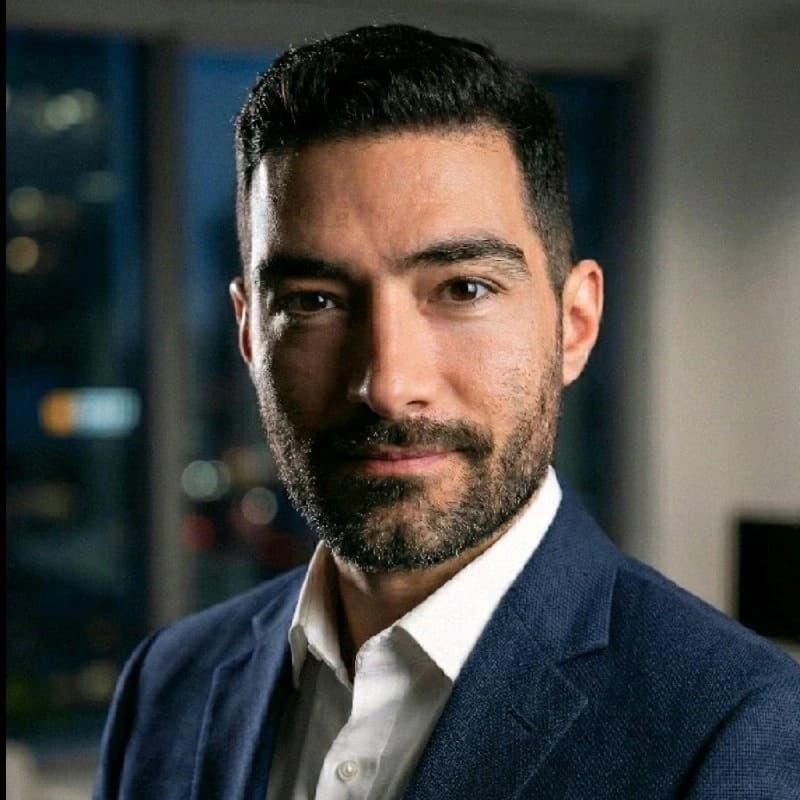
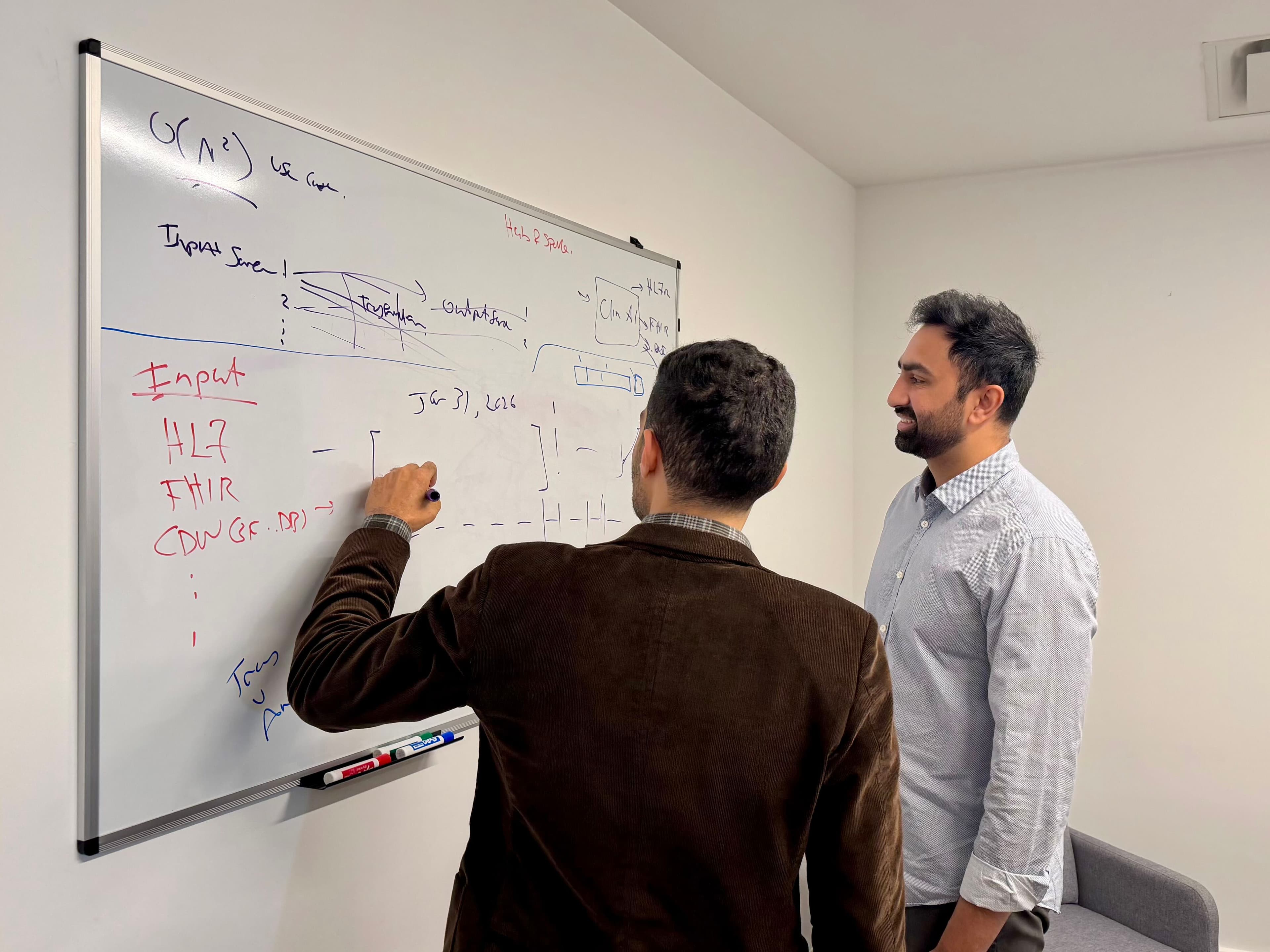
I recently joined Concurrence as Head of Applied AI.
I've spent most of my career working with health data, from deploying clinical decision support at Kaiser Permanente (MAPMG) to leading the National Clinical Cohort Collaborative (N3C) at NIH. Along the way, I've become convinced that some of the most important parts of a patient's story are the ones the record leaves out.
Over the past year, I kept coming back to how disruptive AI has become, and I told myself this was probably a once-in-a-generation opportunity. I wanted to be part of it. This incredibly disruptive moment in history is inevitably going to have a major impact on healthcare. Depending on how it's done, it could set us off on the wrong path, one we'll be locked into for a long time before it can be fixed.
Just look at how many things in the U.S. healthcare system are locked in because of decisions made decades ago. Our electronic health records were largely built around billing rather than learning, and we're still living with that. I wanted to be on the cutting edge of getting this right, at a startup that's going to make an impact. And I wanted to be at a company small enough that the most important decisions are still being made, where I could help shape the platform, the team, and the research from the start.
Here's why that company is Concurrence. It starts with a couple of stories.
The wrong outcome
For much of my 20s, I was dealing with a very difficult-to-diagnose case of sciatic nerve entrapment.
I distinctly remember going to see a doctor. Let's call him Dr. Smith. After I talked him through all of my symptoms, he didn't even examine me.
He told me, “I have something that will help you with your pain. I'm going to prescribe you gabapentin."
Now, being the person that I am, I knew what gabapentin was, and as he was about to leave and have his assistant take over, I challenged him.
“Hey, Dr. Smith, I have a question for you. I'm an otherwise healthy 23-year-old. What do you think is going to happen when I take gabapentin? Do you think my pain is going to get better, get worse, or stay the same?”
“I'm pretty confident your pain's going to improve,” he said.
“Okay. Now, do you think I'm going to want to stop taking gabapentin?”
I didn't have to say anything more. I could see the look on his face. He understood what I was implying. It was almost like a bit of shame overcame him. He then proceeded to examine me.
He actually wasn't a bad physician. In fact, we ended up doing a series of diagnostic injections that ultimately led me to identify a number of lifestyle changes that allowed me to manage my condition. He was very thoughtful and very attentive.
I share this story not because he was a bad doctor. He wasn't. I share it because it made me think about all of the pressures and problems in our healthcare system that lead a physician to resort to the quick fix, the one that would have, on paper, solved my problem: I have pain, and this medication will make my pain go away.
If researchers had come along and done an observational study on gabapentin, and my medical record was included in the population, I would have contributed to that medication's real-world effectiveness. The problem is that it wasn't the right outcome.
“Did Hythem's pain go away?” may seem like the right question on paper, but in reality, the answer would have come with significant consequences for me had I chosen to go down that path. It made me wonder how many other patients who don't know any better don't challenge their physician or their treatment, and as a result end up optimizing for the wrong outcome at great expense to their lives.
Years later, I'd spend a good part of my career running exactly those kinds of observational studies, and I never stopped thinking about the version of me that would have shown up in the data as a success.
And here's the thing: this isn't something a superintelligent medical AI would have solved on its own. I'm sure if you gave a model my symptoms, my imaging studies, and all of my medical information and asked it for a proper treatment, it may well have suggested gabapentin, because, hey, that would have solved my problem.
But it's not solving the right thing.
It really matters how we think about patient outcomes, and it really matters how we incorporate AI, which is wonderful and magnificent and world-changing, into care.
So what would I have wanted instead? Not a smarter prescription.
I'd have wanted an agent that stayed with me between visits, because that's where the real work of managing a condition like mine actually happens.
One that understood I was an otherwise healthy 23-year-old with decades ahead of me, and that “my pain goes away” was only half the outcome. “My pain goes away, and I'm not dependent on anything to get there” was the one that actually mattered.
One that would work through the small, unglamorous changes to how I sat, moved, and went about my day, notice which ones were helping, and bring that back to my physician, so our next visit started from what was actually happening in my life.
One that would give my physician the mental space to focus on my treatment properly, and not just medicate me. And one that would carry what worked for me into the care of the next patient whose story looked like mine.
That's the AI I want in care. Not one that replaces the physician's judgment, but one that gives them the room to use it.
Two models and a “friend”
I'm a bit of a data nerd, and I still am. Even back in the early 2010s, I had digitized all of my clinical notes, my after-visit summaries, and my imaging studies. I copied the CDs onto my hard drive and eventually moved everything into the cloud.
About a year ago, I decided to see how frontier models would fare with my case. I gave two frontier models all of my medical documents, my imaging studies, everything, and asked them to help diagnose me. I answered any questions they had along the way.
The two models proposed very different diagnoses. Neither was correct. I then took each model's suggestion and gave it to the other: “Hey, this is my friend's suggestion. What do you think?” I sometimes do this to see to what extent a model is just going to be agreeable versus stick to its own convictions. Both responded with some version of, “Ooh, yes, I prefer what your friend says. They're right, and I was wrong.” They switched.
There's something else worth knowing. Both of those diagnoses had already been crossed off my list, just not anywhere the models could see. My physicians ruled them out early, through physical exams and conversations that never made it into my chart. To anyone in the room, those diagnoses were far-fetched. On paper, they were perfectly plausible.
But what bothered me most was why they changed their minds. Nothing about my case had changed. No new symptom, no new test result. The only new information was that someone else disagreed. If a physician abandoned a diagnosis the moment a colleague walked in with a different opinion, without asking a single question about why, that would worry me. What I'd want to hear is, “Those two diagnoses predict different things. Here's what would tell them apart.” Good clinicians turn a disagreement like that into a test.
The problem wasn’t intelligence. Both models knew more medicine than I ever will. What they lacked was the context that never got written down, and a stable sense of what they believed, how confident they should be, and what evidence should change their minds.
In healthcare, that isn't a nice-to-have. It's the whole job.
I'm not denying that frontier models have helped many people. They've helped people get to the right diagnosis, navigate the system, and advocate for themselves. What my experiment highlights, to me, is the need for better ways for AI to interact with people in the healthcare system, so that we maximize the improvement to people's lives and prevent things like this from happening.
Down to luck
My older daughter was born in January 2020, just as the pandemic was beginning. She was born with a hole in her heart, a ventricular septal defect, and for months no one knew.
We knew something wasn't right. She wasn't thriving, and the signs were there every day, but none of it added up to an answer. Then the pandemic shuffled the clinic's schedule, and she was seen by a different pediatrician, who listened to her heart and told us to go to the hospital. I remember feeling less scared than like a third-party observer to my own life.
A few months later, she had open-heart surgery. Her heart is perfectly healthy today.
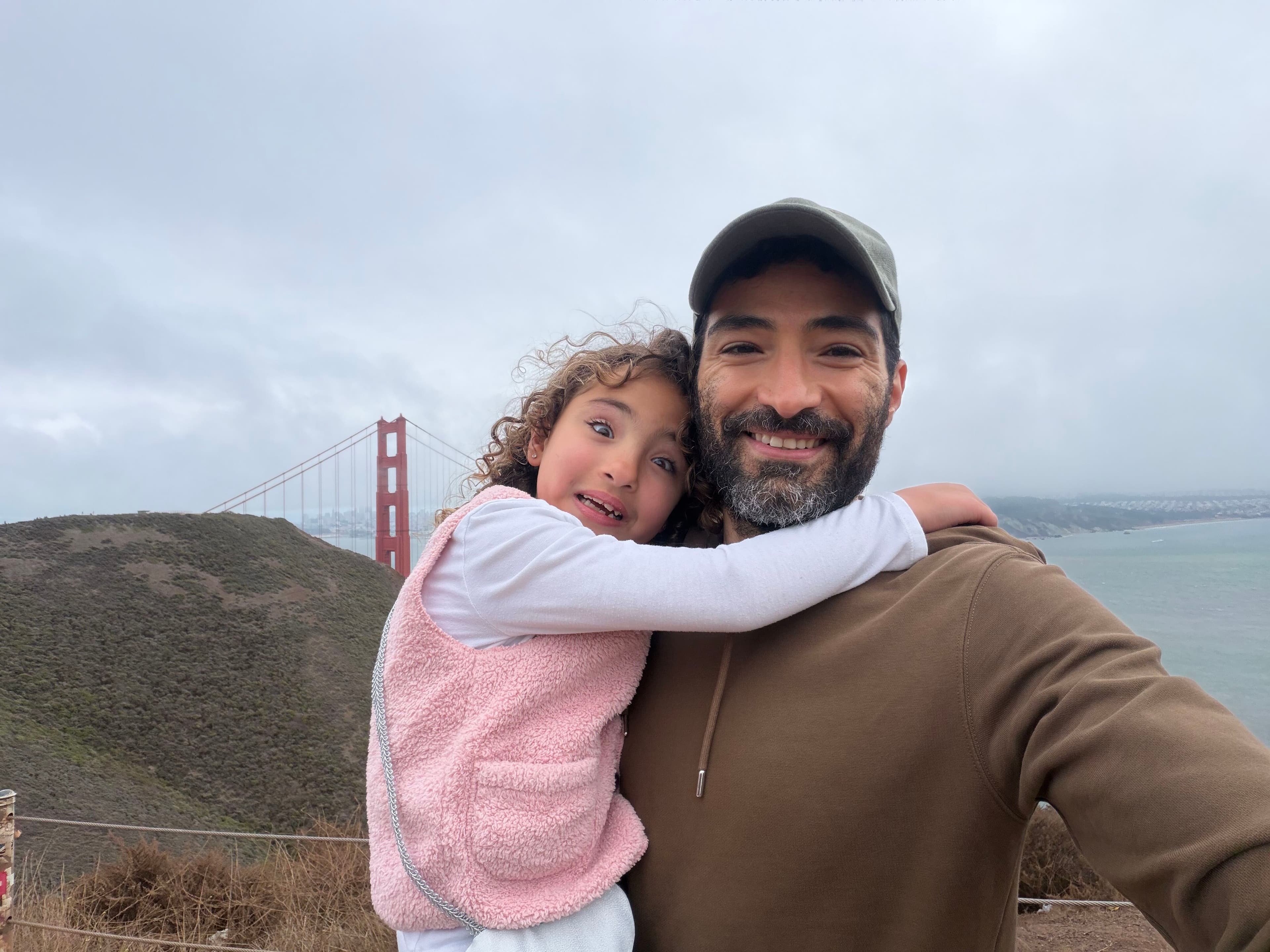
I think about that scheduling change a lot. Whether she got the right answer came down to luck. The signs were there the whole time, at home, between visits, in the moments no one was writing down. That's where I believe AI can make the biggest difference: not by replacing the pediatrician, but by staying with families between visits, noticing when something deserves a closer look, and making sure the right physician sees it sooner.
It's part of why the name Concurrence means something to me. The word means agreement in judgment. People reasoning from the same evidence and arriving at the same answer. For my daughter, the answer depended on which pediatrician happened to be on the schedule. No family should have to depend on a scheduling change to get the right answer.
What the record leaves out
I've spent most of my career on the data side of this problem.
My time at N3C showed me how heterogeneous and messy EHR data really is. Our entire team worked incredibly hard to take all of those disparate kinds of data, make them available to researchers, and help those researchers understand how a model should translate across health systems that are very different from one another.
Along the way, my colleagues and I documented just how much the picture of a patient changes depending on where you look. Working with EHR data from more than 65 institutions and four different data models, we found data elements captured differently from site to site, missing data, drug exposures recorded without dose or route, and gaps in history every time a patient moved between health systems.
We just posted a follow-up that shows what that costs. We linked N3C's EHR data with CMS claims for the same patients and asked the same question: does COVID-19 vaccination affect the risk of ischemic stroke? Looking at EHR data alone pointed to a sizable drop in stroke risk after vaccination. With claims data in the picture, that effect all but disappeared, and the estimate landed close to no change in risk, which is a reassuring answer in its own right. Depending on which slice of the same patients’ story we could see, we got a different answer. EHR data alone is biased. Claims data alone is biased. Each is a partial representation of a person. And even together, they're mostly a record of encounters and billing.
That's what drew me to Concurrence's vision of a holistic patient representation. The vision to build a Health World Model that unifies a patient's data into a single longitudinal picture, and agents that capture the context missing from the record, in the moments where care actually happens. We've laid out how we're approaching this in our Introduction to Research at Concurrence. I'll be working across our research program to close the loop between what we learn in the field and the questions we study.
What I pressed on before saying yes
Before I said yes, I pressed Ali and John on a lot.
First, what actually differentiates Concurrence, today and over time. I firmly believe that with frontier models, the window for holding a technological advantage in software is rapidly shrinking, if it hasn't closed already. What makes or breaks a company in an environment that demands very high levels of trust is execution. That means flawless delivery, in partnership with customers, inside their workflows. I learned that working on the provider side, where making AI impactful meant partnering closely with clinicians, ops teams, and scheduling staff to craft a workflow that was actually fit for purpose. Ali and John didn't pitch me a technology moat. They talked about deployment excellence.
I also asked them a hypothetical. If someone came along tomorrow and offered boat loads of money to build something outside our core platform vision, would we take it? The answer was an emphatic no. A company willing to give up short-term revenue for its long-term vision is one I want to build with.
I pushed on outcomes, too, because after Dr. Smith, I'm wary of any system that optimizes for the easy metric. The answer is in our research agenda. We fill in the gaps between visits, and optimize across what the provider is responsible for, what patients care about, and the constraints the organization operates under. I also needed to know I'd have the room to do this job the way it needs to be done. That requires bringing applied AI, applied research, and core engineering together, so that every deployment makes the platform better.
Built to travel
Most of the attention in healthcare AI goes to the application: diagnosis, computer vision to spot malignancies, and so on. A model gets tested in one or two health systems, it works great, and everyone moves on. But does it actually work across different health systems in the real world?
It's a gap very few people talk about, which is why I was so glad to see my former colleagues at NCATS and N3C launch the Real-World Evidence Innovation Challenge. It takes on the lack of validated standards for how analytic methods perform across heterogeneous real-world clinical environments, and it judges methods on whether they hold up across health systems, not on how well they perform in just one.
Transportability was a big one for me. After years of watching models that worked beautifully at one site fall apart at the next, I know how much of that comes down to data and operational heterogeneity. As someone who builds agents, I want to build in an environment that's abstracted away from the heterogeneity of every customer's data, and let the platform handle it. I want to code against a set of unified primitives that makes my agent as portable as humanly possible. Every deployment will need some tailoring, of course. But Concurrence's commitment to a data platform designed to make what we learn, and what we build, maximally portable is a big part of why I'm here.
The hardest version of this problem is learning across institutions without anyone giving up control of their data. How we extract impactful insights in a privacy-preserving way is active research. A tricky problem. But it's the right problem, and it's one Concurrence is committed to working on.
What I'm here to build
Here's how I think about an AI deployment function. If the team that deploys our agents has to grow in lockstep with the number of customers we serve, we're a services shop. The deployment team has to scale sublinearly. Every deployment should make the next one easier, because what we learn in the field becomes capability in the platform. That takes working hand in glove with core engineering, and it takes process.
I think of it like a play. There are acts, from pre-sales through contracting, implementation, and everything after, and a cast with sales, sales engineering, deployment strategists, and applied AI engineers. Each comes on stage on cue, does their part, and hands off cleanly. The customer is the audience, and our job is to deliver a performance that earns wonderful reviews.
I've done versions of this before. At Concurrence, I'm bringing that same process discipline, along with the domain expertise to help our team anticipate the unknown unknowns that only show up once you’ve deployed AI inside real health systems. I’m starting by building the playbooks, the handoffs, and the structure that let an already talented team scale.
An invitation
I'm grateful to my colleagues at Verily, where I had the privilege of building alongside a remarkable team.
I want to help build a healthcare system where patients don't have to challenge their doctor to get the right outcome, and families don't have to depend on a scheduling change to get the right answer.
If you're building in this space, whether you're leading applied AI somewhere else, bringing agents into your health system's workflows, or working on the hard research problems of transportability, causality, and privacy-preserving learning, I'd love to hear from you. And if you want to help build the team that makes this work in the real world, we're hiring. Reach out.
- Hythem