

Your organization probably looked at Hippocratic AI because the speed of deployment is real. So is the ceiling. Once you need custom clinical logic, a unified data foundation, or anything on the clinician side, you're outside what it covers. These alternatives are worth a closer look.
TLDR:
- Hippocratic AI's template-first model works for standard patient-facing voice workflows but excludes back-office, RCM, and clinician-side tools entirely.
- Organizations that start with one patient outreach tool often add a scribe, scheduling, and RCM vendor within two years, making consolidation worth assessing early.
- No Hippocratic AI alternative in this comparison except Concurrence covers patient-facing AI, clinician-side workflows, unified data, and back-office RCM together.
- Concurrence deploys workflows on a Health World Model and requires a 100% safety pass rate through Digital Residency before any agent reaches a real patient.
What Is Hippocratic AI and How Does It Work?
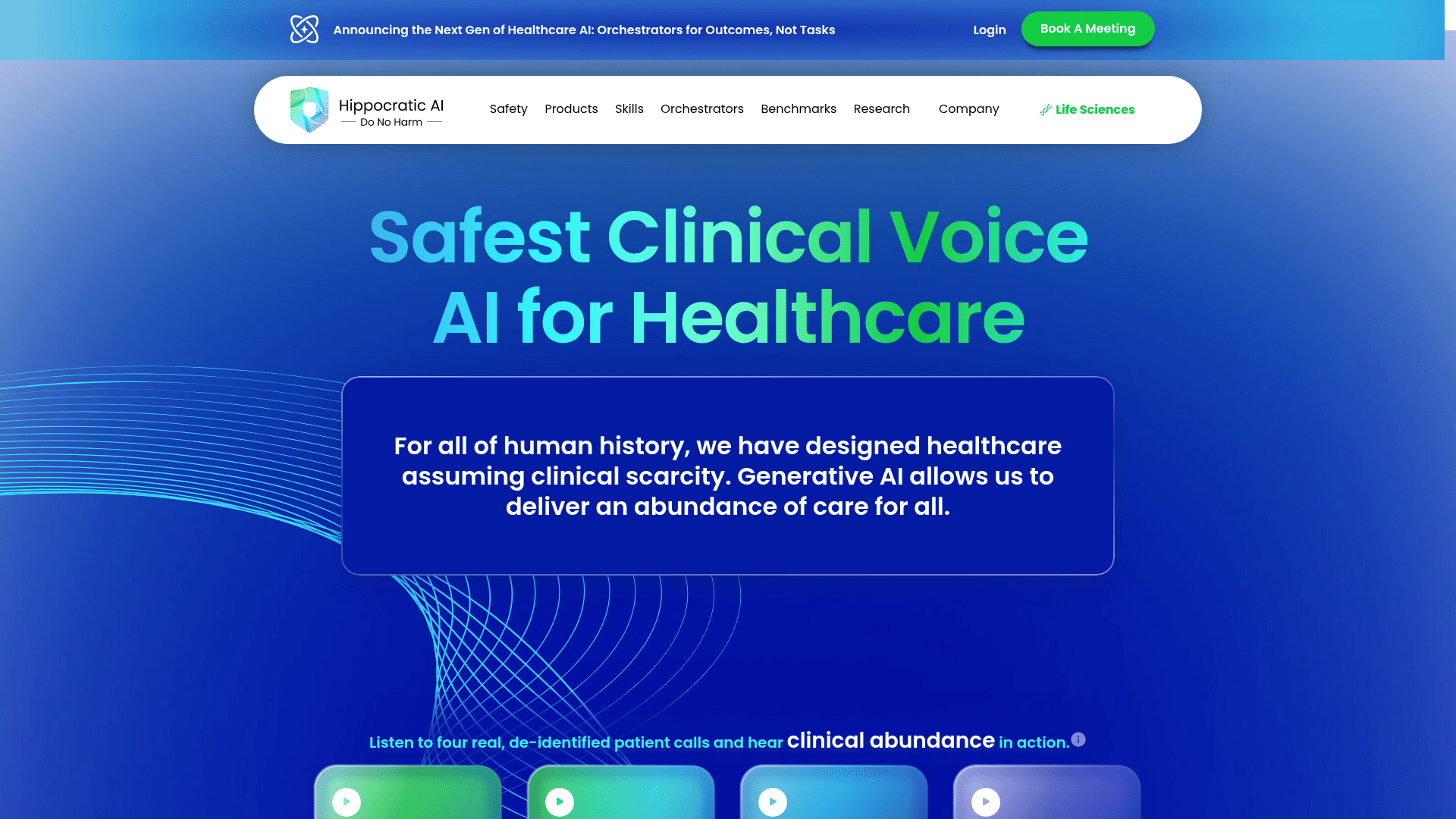
Hippocratic AI is a healthcare AI company focused on patient-facing voice agents for payers, providers, and life sciences organizations. Its core offering is a library of over 1,000 pre-built agents built on its Polaris architecture, each safety-tested through a network of 7,000+ licensed clinicians. Use cases span chronic care management, readmission reduction, star ratings improvement, and clinical trial enrollment.
In August 2026, the company announced a new layer called Agentic Orchestrators: coordinated teams of voice agents managed by a supervising orchestration layer, designed around the premise that moving clinical outcomes at scale requires more than a single agent completing a single task, a conclusion drawn from more than 250 million patient interactions.
Hippocratic AI's model is template-first. Organizations select from a pre-built library, configure to their workflow, and deploy. The tradeoff is speed versus fit: organizations with standard use cases can move quickly, while those with complex, institution-specific protocols may find the template model too rigid to meet their needs. The company also focuses strictly on patient-facing conversations and does not cover back-office or revenue cycle workflows.
Why Consider Hippocratic AI Alternatives?
Hippocratic AI's pre-built library moves fast. If you need a validated, patient-facing voice agent deployed quickly against a standard use case, the template model is genuinely effective. That speed is a real advantage for organizations with straightforward needs and no appetite for lengthy implementation cycles.
The limitations surface when your needs fall outside those boundaries. A few situations where Hippocratic AI tends to fall short:
- Custom clinical protocols: the template library is fixed. Organizations with institution-specific workflows, specialized patient populations, or unique escalation rules often can't get close enough to what they actually need.
- Back-office workflows: prior auth, referral management, denials management, and RCM are outside Hippocratic AI's scope entirely. It is a patient-facing product.
- Clinician-side tools: clinical scribing and provider copilot tools, and care plan generation are not part of the offering.
- Data unification: Hippocratic AI does not provide a unified patient data foundation. Organizations that need context pulled from multiple sources, including EHR, claims, and environmental data, are working without that layer.
The vendor sprawl problem is worth naming directly. Organizations that start with one patient outreach tool often find themselves adding a scribe vendor, a scheduling vendor, and an RCM tool within two years. If you are thinking past a single workflow, consulting a guide to assessing AI agent vendors is worth doing from the start.
Best Hippocratic AI Alternatives in October 2026
1. Concurrence
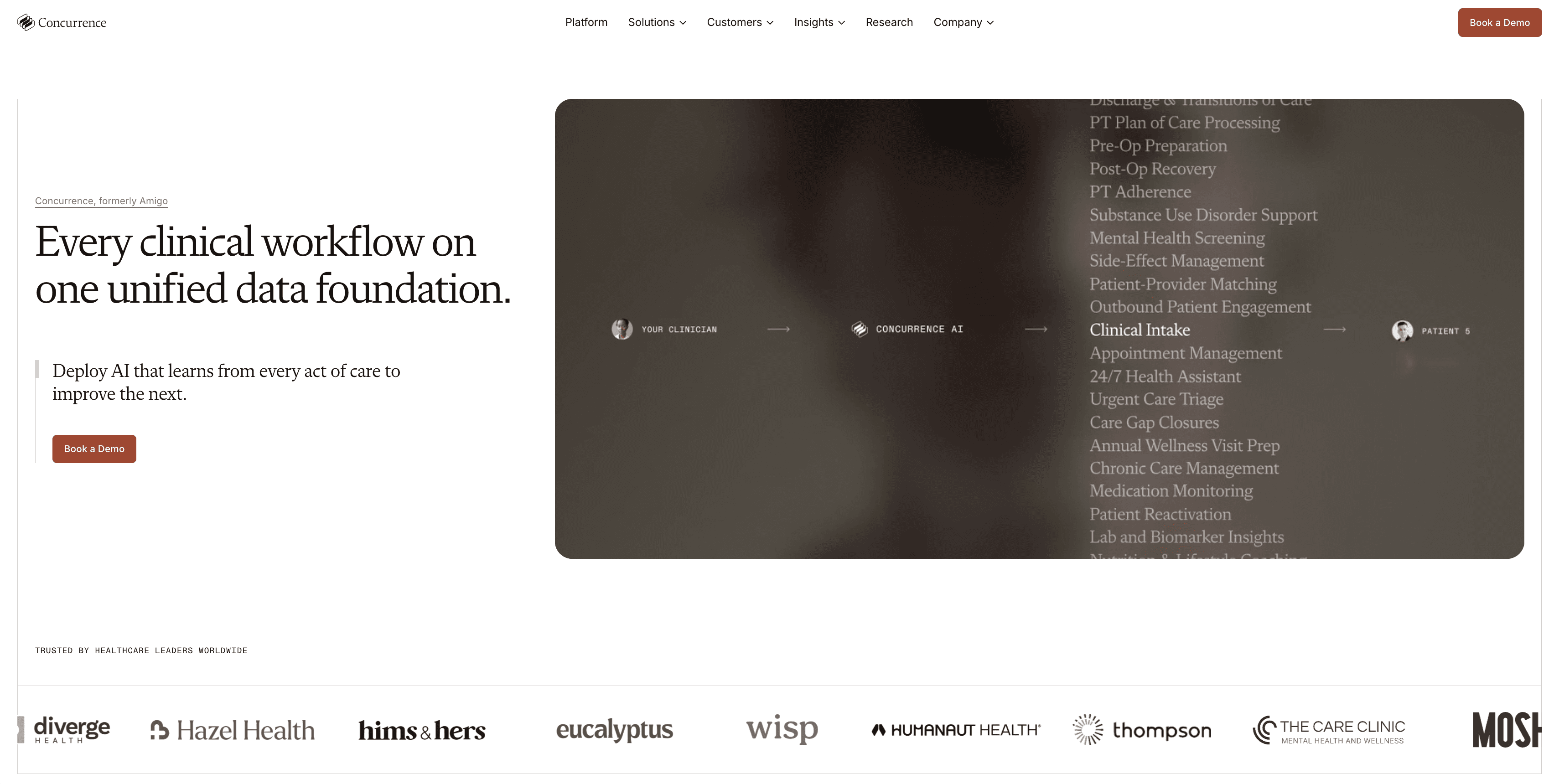
Concurrence is a healthcare data and AI company that unifies institutional data into a Health World Model and deploys an all-in-one clinical workflow platform that learns from every act of care. Workflows span patient-facing and clinician-side needs: proactive outreach, scheduling, intake, triage, post-visit follow-up, medication management, clinical scribing, provider copilot, care plan generation, and referral management. The Digital Residency simulation engine requires a 100% safety pass rate before any agent speaks with a real patient.
Best for: Health systems, life sciences, pharmaceutical companies, payers, and public sector organizations that need custom workflows built on their own protocols, a unified data foundation, and a forward-deployed team that owns deployment success.
2. Sully.ai
Sully.ai builds autonomous agents for clinical and administrative workflows, including clinical notes, coding, nursing, and receptionist functions. It works well for enterprise hospitals reducing documentation burden, but lacks a unified patient data foundation connecting history and outcomes across workflows.
3. Infinitus
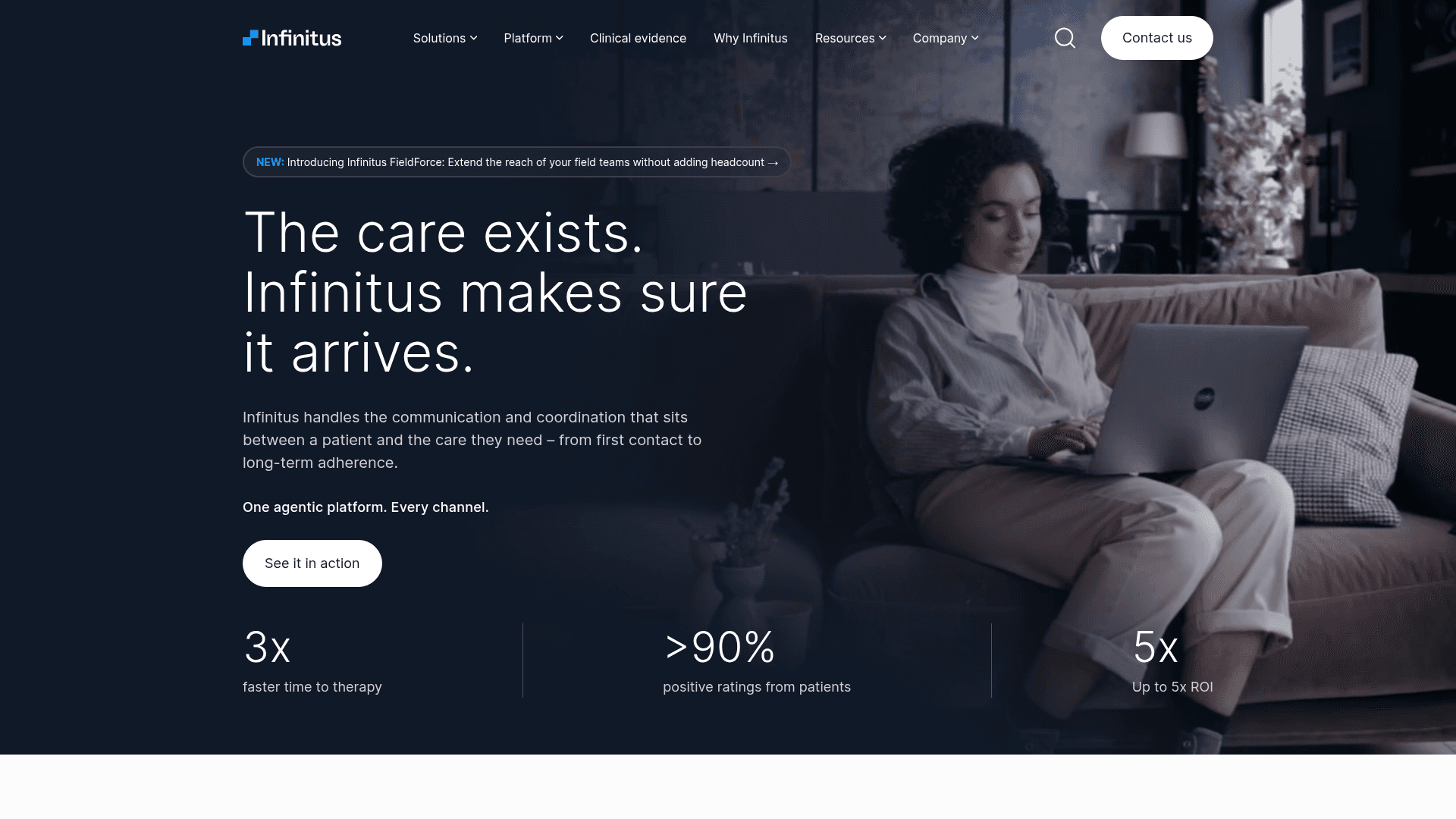
Infinitus helps call centers handle inbound call volumes and has expanded into agentic tools for payer member engagement. It is a focused payer tool and does not cover provider-side care journey workflows or offer a unified clinical data foundation.
4. Hello Patient
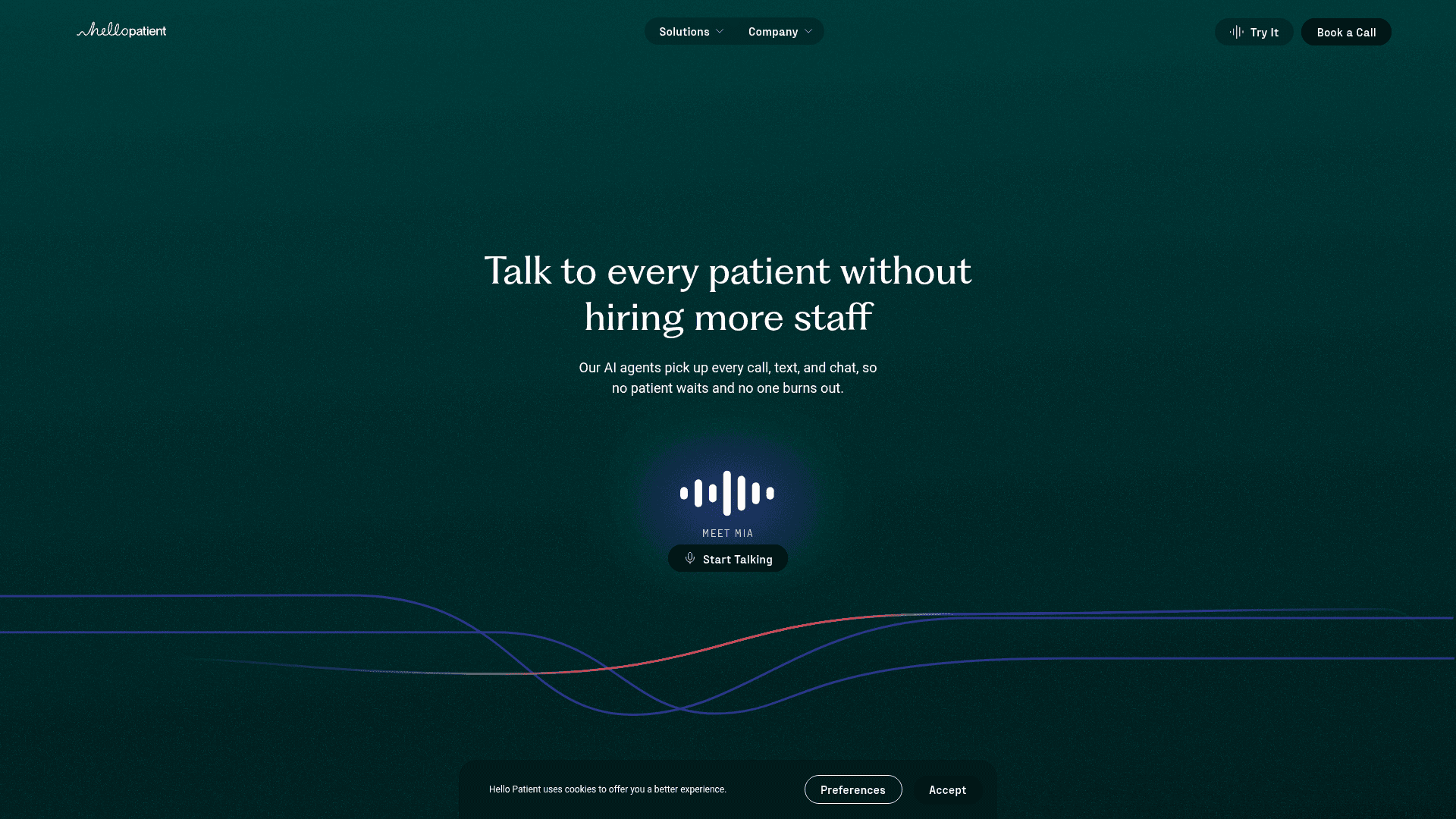
Hello Patient's AI agent handles inbound calls, scheduling, and intake automation for medical practices. Strong for smaller practices automating front-office communications; limited for institutions that need clinical workflows, back-office automation, or a longitudinal data model.
5. Assort Health
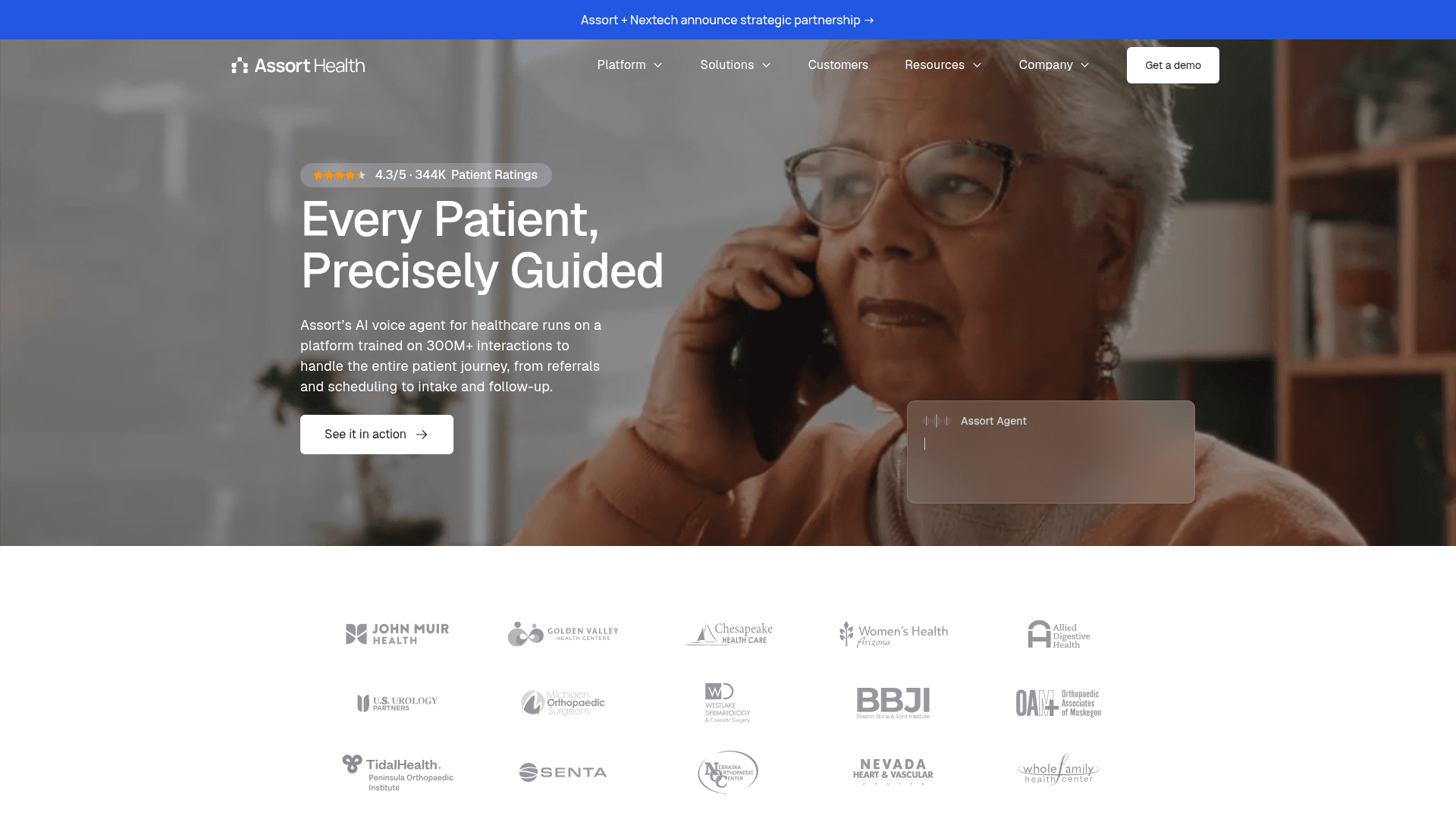
Assort Health offers specialty-trained voice AI for inbound calls across 20+ specialties, plus an outbound agent for patient outreach. Strong for specialty call volume but limited to the voice channel, with no scheduling and reminders workflows or unified data infrastructure.
6. Notable
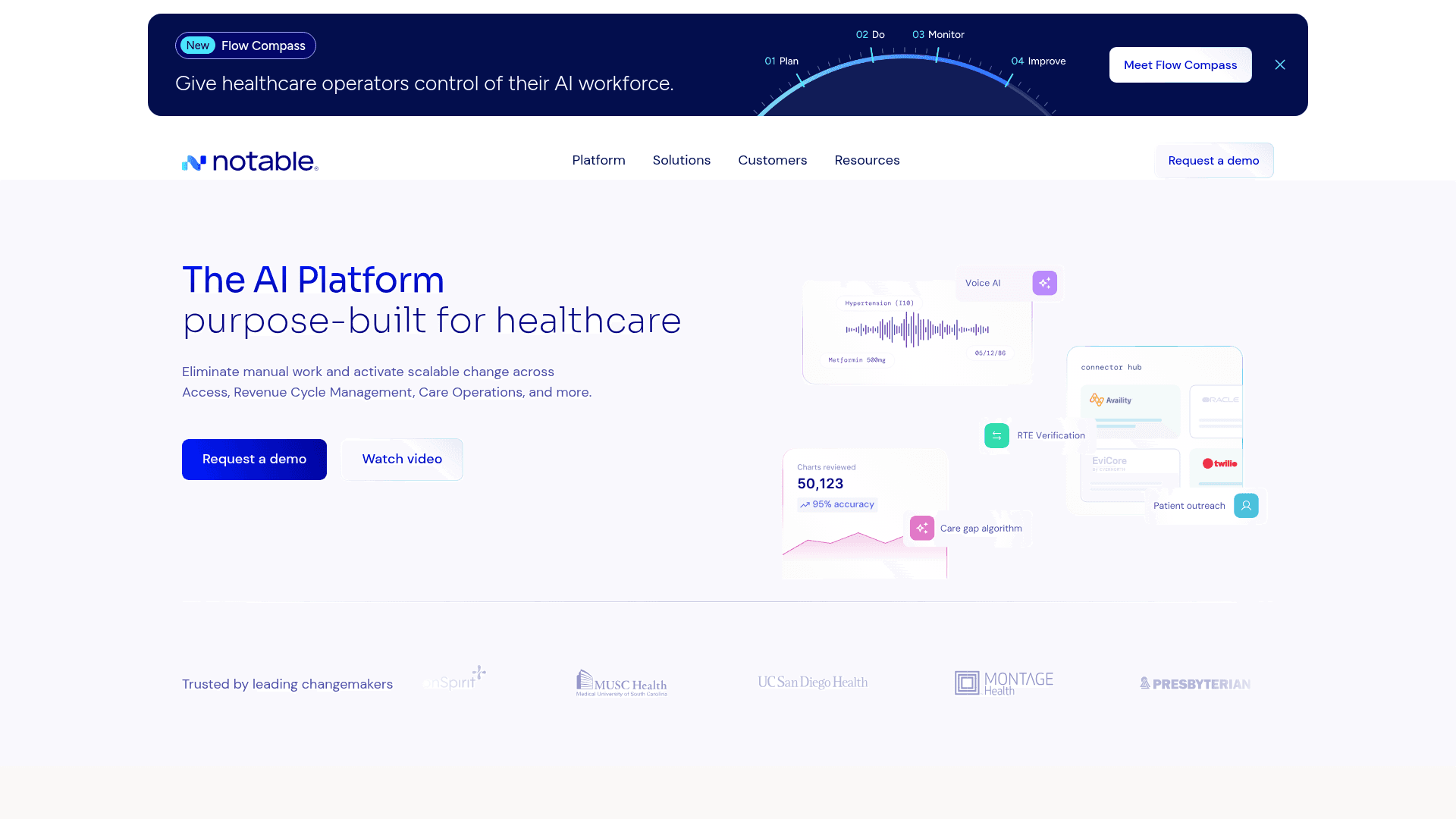
Notable automates administrative workflows across intake, registration, referral management, and billing for health systems, without care plan generation for clinicians. It handles administrative scale well but does not offer patient-facing conversational AI, clinician-side tools, or a learning data foundation.
Quick Comparison
| Alternative | Patient-Facing AI | Clinician-Side AI | Unified Data Foundation | Back-Office / RCM |
|---|---|---|---|---|
| Concurrence | Yes | Yes | Yes (Health World Model) | Yes |
| Sully.ai | Partial | Yes | No | Partial |
| Infinitus | Yes (payer) | No | No | Partial (payer) |
| Hello Patient | Yes | No | No | Partial |
| Assort Health | Yes | No | No | Partial |
| Notable | No | No | No | Yes |
Feature Comparison: Hippocratic AI vs Top Alternatives
A few points worth noting before reading the table. Hippocratic AI's pre-deployment safety simulation is one of its more distinctive capabilities, and Concurrence matches it through Digital Residency. Where Hippocratic AI falls short is breadth: it has no clinician-side workflows, no post-visit follow-up or RCM support, and only limited custom clinical protocol support through a template library. Concurrence is the only vendor in this comparison that covers all five capability areas.
| Feature | Hippocratic AI | Concurrence | Sully.ai | Infinitus | Hello Patient | Assort Health | Notable |
|---|---|---|---|---|---|---|---|
| Unified patient data foundation | No | Yes (Health World Model) | No | No | No | No | No |
| Patient-facing AI workflows | Yes | Yes | Partial | Yes (payer) | Yes | Yes | No |
| Clinician-side workflows | No | Yes | Yes | No | No | No | No |
| Back-office and RCM | No | Yes | Partial | No | Partial | Partial | Yes |
| Pre-deployment safety simulation | Yes | Yes (Digital Residency) | No | No | No | No | No |
| Custom clinical protocol support | Limited (template library) | Yes | Partial | No | No | No | No |
| EHR integration | Partial | Epic, Oracle Health, Athenahealth | Partial | Partial | Partial | Partial | Partial |
Why Concurrence Is the Best Hippocratic AI Alternative
Hippocratic AI delivers real value for organizations that want pre-built patient-facing voice agents deployed quickly against standard workflows. Where it stops short is the depth most health systems actually need: custom clinical logic built on institution-specific protocols, a unified data foundation connecting EHR, claims, and outcomes, and coverage that extends beyond patient-facing conversations into clinician-side tools and back-office workflows.
Concurrence is built for that broader scope. Every workflow runs on the Health World Model, so agents share the same patient context and operate from a shared foundation instead of in isolation. Digital Residency and Patient Outcome Pathways go further than pre-deployment safety checks: every interaction feeds back into the model, so the institution's AI gets incrementally smarter over time. That compounding loop is the structural difference between a vendor that deploys agents and one that builds institutional intelligence. For organizations thinking past a single workflow and a single vendor contract, Concurrence's healthcare AI solutions are the more durable path.
Final Thoughts on Picking a Hippocratic AI Alternative
For standard patient outreach, Hippocratic AI moves fast and gets the job done. But your needs rarely stay that contained, and switching vendors mid-growth is painful. Starting with a clearer picture of where you want to be in two years makes the initial choice a lot easier to defend.
FAQ
Why do healthcare organizations look for Hippocratic AI alternatives?
Hippocratic AI's template library works well for standard patient-facing voice workflows, but organizations with institution-specific clinical protocols, clinician-side tool requirements, or back-office automation needs often find the pre-built model too rigid. The product also has no unified patient data foundation, which creates gaps for organizations pulling context from EHR, claims, and outcomes data simultaneously.
What features should you focus on when comparing Hippocratic AI alternatives?
Look for a unified patient data foundation, pre-deployment safety simulation, custom clinical protocol support, and coverage across both patient-facing and clinician-side workflows.
When should you consider moving away from Hippocratic AI to a solution like Concurrence?
If your organization needs workflows beyond patient-facing voice, including clinical scribing, care plan generation, prior authorization, or referral management, Hippocratic AI's scope will leave gaps. Organizations building toward a multi-workflow AI strategy are better served by a vendor that covers all those areas from a single, unified data foundation.
How does Concurrence's Digital Residency differ from Hippocratic AI's pre-deployment safety testing?
Both products require agents to pass safety benchmarks before going live with real patients, but Concurrence's Digital Residency stress-tests agents against millions of scenarios reflecting the actual patient population, with a 100% safety pass rate required before deployment. Every live interaction then feeds back into the Health World Model, so the institution's AI improves continuously and does not remain static post-deployment.
Can Concurrence support organizations that need back-office and clinician-side workflows beyond patient outreach?
Yes. Concurrence covers proactive outreach, intake, triage, post-visit follow-up, medication management, referral management, clinical scribing, provider copilot, and care plan generation from a single infrastructure layer. Hippocratic AI, Assort Health, Hello Patient, and Infinitus each cover a narrower slice, with no clinician-side or back-office capabilities.